

In-House Tooling, Casting & Forging.
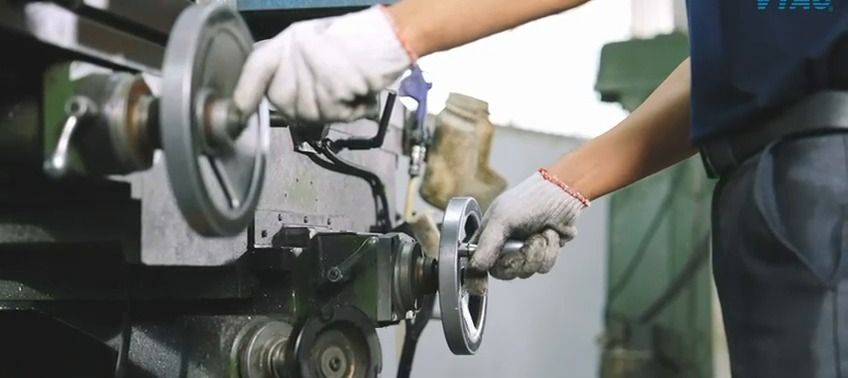
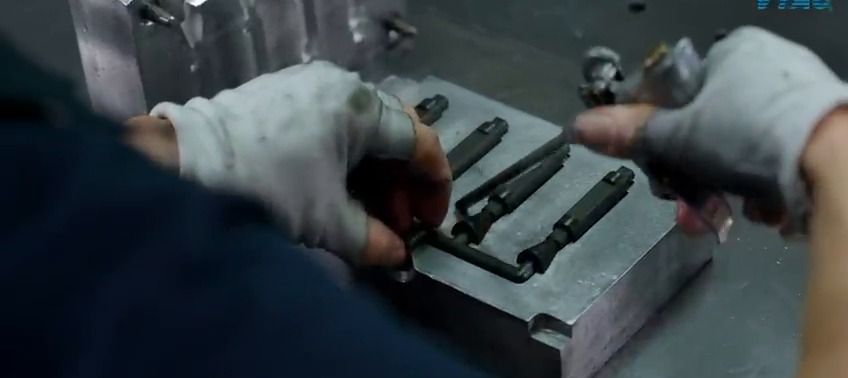
In brief
Our tooling team works beside casting and hot-forging production to turn a drawing, sample or performance requirement into a repeatable brass or stainless-steel component, with trial results fed directly back into tool adjustment.
When the people who design a die work beside the people who run the press, a trial result becomes a tooling adjustment without a purchase order in between. That shortens the loop between what a customer asked for and what comes off the tool. The result is a product that reaches production-ready form more accurately and more quickly, with the reason for every change understood by one team.
From Requirement to Approved Production.
The tooling facility is the hinge of this sequence: steps three to five repeat inside our own factory until the part is right.
- 01
Requirement Review
Drawing, sample or application brief — we establish what the part must do and how it will be finished.
- 02
Engineering Assessment
Process route, parting lines, draft and machining allowance are worked out before tooling begins.
- 03
Tool Design and Build
Moulds and dies are designed and made in our own tooling department.
- 04
Trial Production
First parts are cast or forged on the production equipment they will run on.
- 05
Measure and Adjust
Trial parts are measured; the tool is corrected in-house and trialled again.
- 06
Production Approval
Approved samples and dimensions become the reference for repeat production.
Investment Casting or Hot Forging?
Both are available in our own factory, so the recommendation follows the part — not the limits of a single process.
A
Investment Casting
Choose for geometry: complex shapes, internal features and fine detail.
- Complex external forms, internal features and undercuts that would be costly to machine.
- Formed close to final shape, so machining concentrates on the critical features.
- Tooling: moulds for wax patterns.
B
Hot Forging
Choose for strength and surface: dense metal that polishes and plates well, in repeat batches.
- A dense, sound structure — a good foundation for polishing and plating.
- Well suited to brass hinge bodies and similar solid components produced in repeat batches.
- Tooling: forging dies, made and adjusted in our own tooling department.
We recommend the route during drawing review, based on geometry, strength, surface, quantity and material.
Forging capability
Forged In-House, Finished In-House.
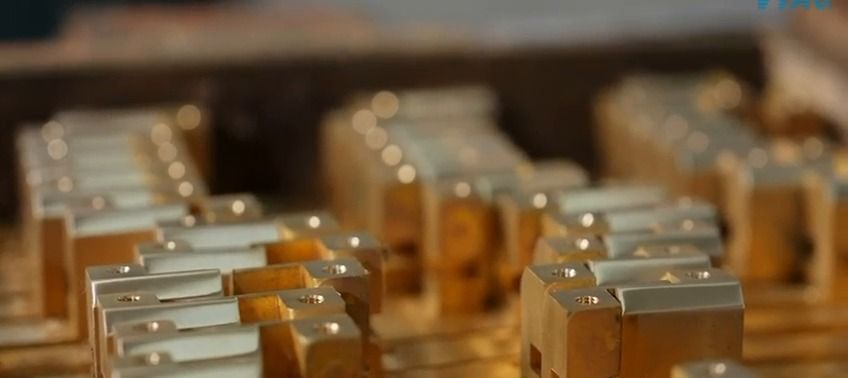
Our forging line supports repeatable production of architectural hardware components, from heated billet and precision tooling through trimming, CNC machining, polishing, plating and final inspection.
What We Make
- Brass hinge bodies and hinge plates
- Customer-specific brass components developed with in-house forging dies
Process Envelope
- Material
- Hot-forged brass.
- Part size and weight
- Matched to the press and die for each component at drawing review.
- Geometry
- Solid, load-bearing forms with machined interfaces: hole positions, mating faces and bores are finished by CNC after forging.
- Batch size
- Repeat production with dedicated dies.
- After forging
- Trimming, CNC machining, polishing, in-house plating, inspection and packing within the same production system.
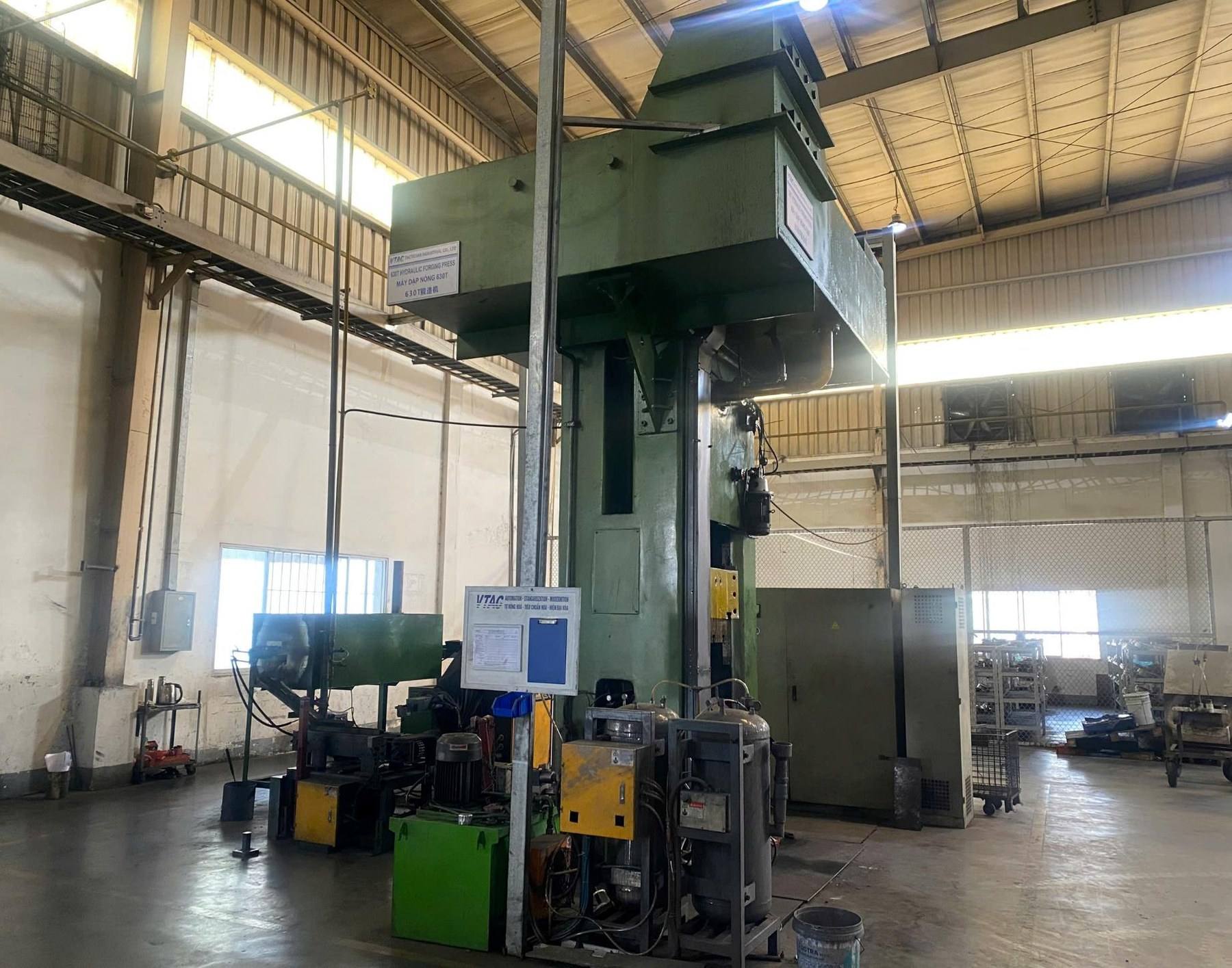
Production equipment
| Press capacity | Quantity |
|---|---|
| 150 t | 1 |
| 200 t | 3 |
| 300 t | 2 |
| 630 t | 1 |
Hot-forging presses. Mechanical transfer arms or FANUC robots assist billet handling on selected presses.
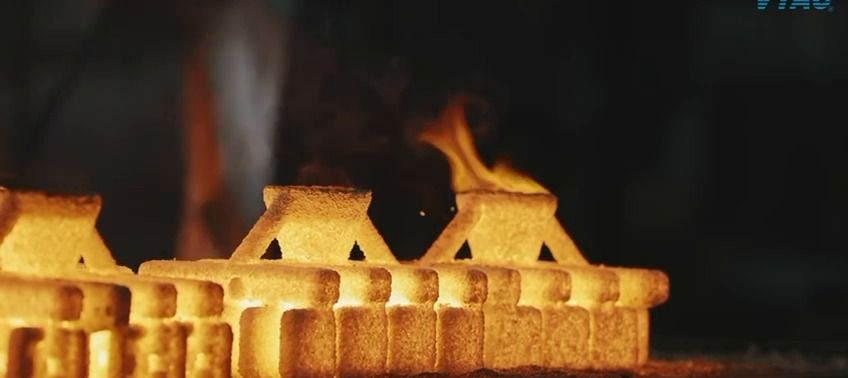
01 — Billets at forging temperature 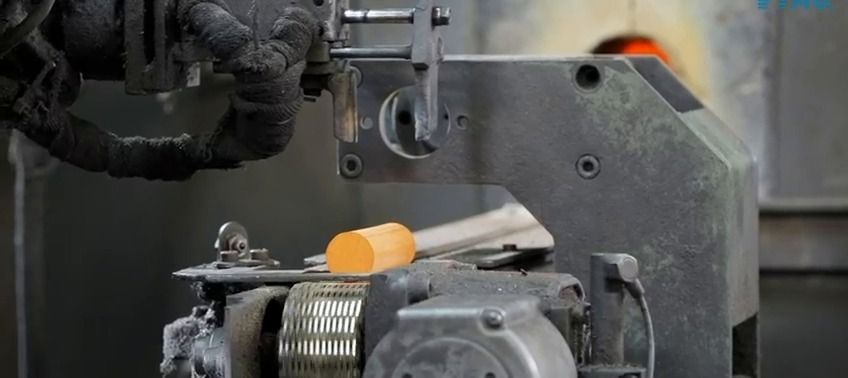
02 — Billet positioned in the die 03 — Tooling department
Stills from our 2026 factory film.
Technical notes
Technical Details.
- Tooling
- Designed, built, adjusted and maintained in our own tooling department at the factory in Vietnam.
- Forming processes
- Investment casting (wax injection, shell building and casting) and hot forging.
- Forging presses
- 150 t × 1, 200 t × 3, 300 t × 2, 630 t × 1. Mechanical transfer arms or FANUC robots on selected presses.
- Lead times
- Quoted with each project.
- What to send
- Drawing or sample, material and finish, expected annual quantity, and any standard the finished part must meet.
Glass hardware · Casting, Forging & Tooling
Developing a Product That Does Not Exist Yet?
Start with a drawing, a sample or a requirement. We will review it with engineering and tooling together.