

Wet and Outdoor Glass Hardware.
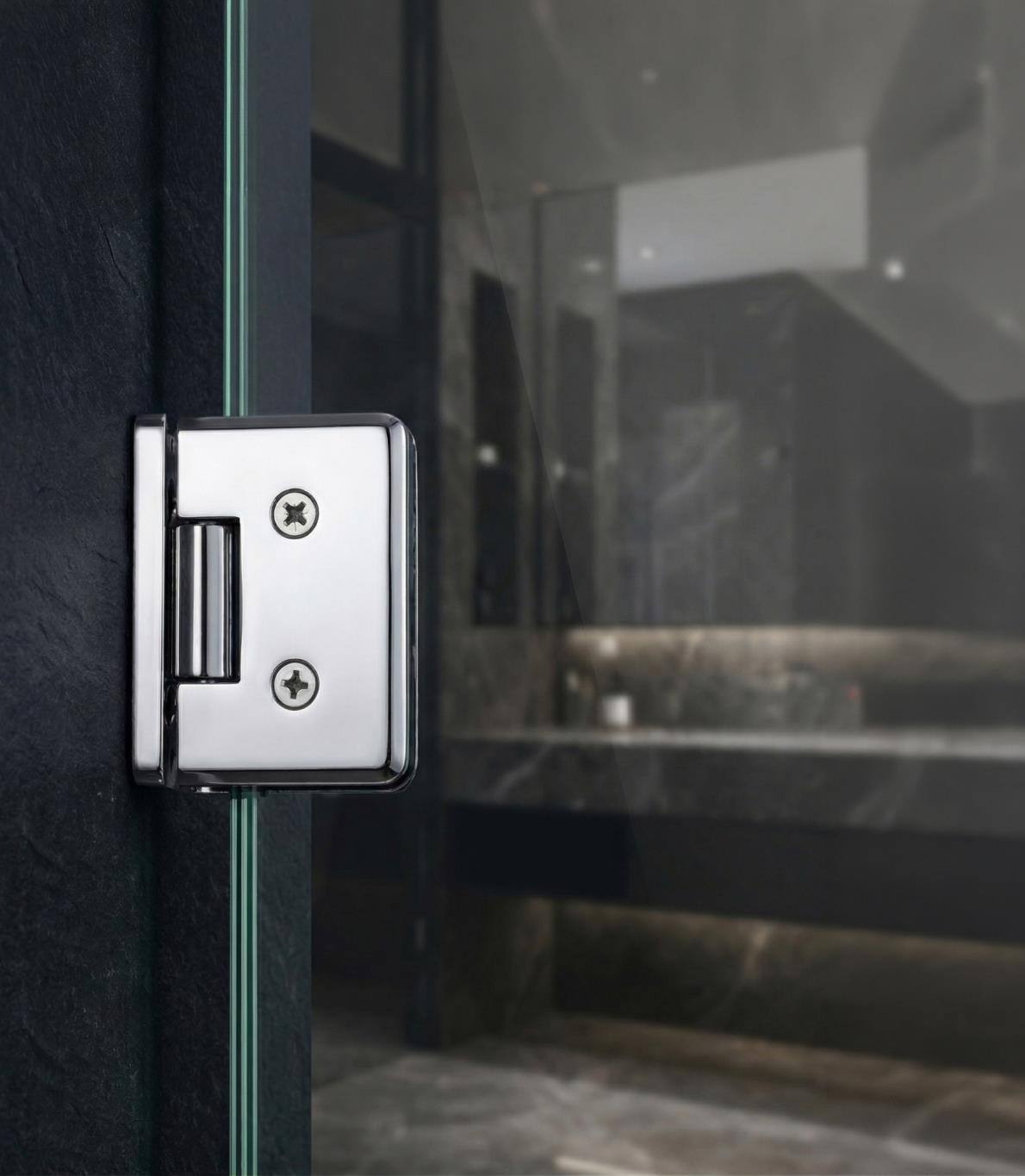
In brief
Shower hinges, balcony fittings and façade connections face different moisture, cleaning and exposure conditions. We review the base material, finish, construction detail and care requirements as one specification for the intended environment.
Steam, standing water, cleaning agents, temperature swings and airborne deposits all act on metal. Durability in these places does not come from a coating added at the end. It comes from choosing the base material, the finish, the construction details and the care routine together. Weather is part of the design.
Three Environments, Three Different Briefs.
A
Bathrooms and Wet Areas
A core application: material and finish are selected for wet service.
- Daily wetting and drying, warm humid air and condensation.
- Soap residue and household cleaners, some of them aggressive to metal finishes.
- Moving parts — hinges and sliding hardware — that must keep working while wet.
B
Exposed Outdoor Applications
Grade and finish matched to the exposure.
- Rain, temperature change and sunlight over long periods.
- Airborne dirt and deposits that settle on surfaces and hold moisture.
- Places where water can collect: joints, fixings and horizontal faces.
C
Coastal, Pool and Chemical Environments
A dedicated specification for each site.
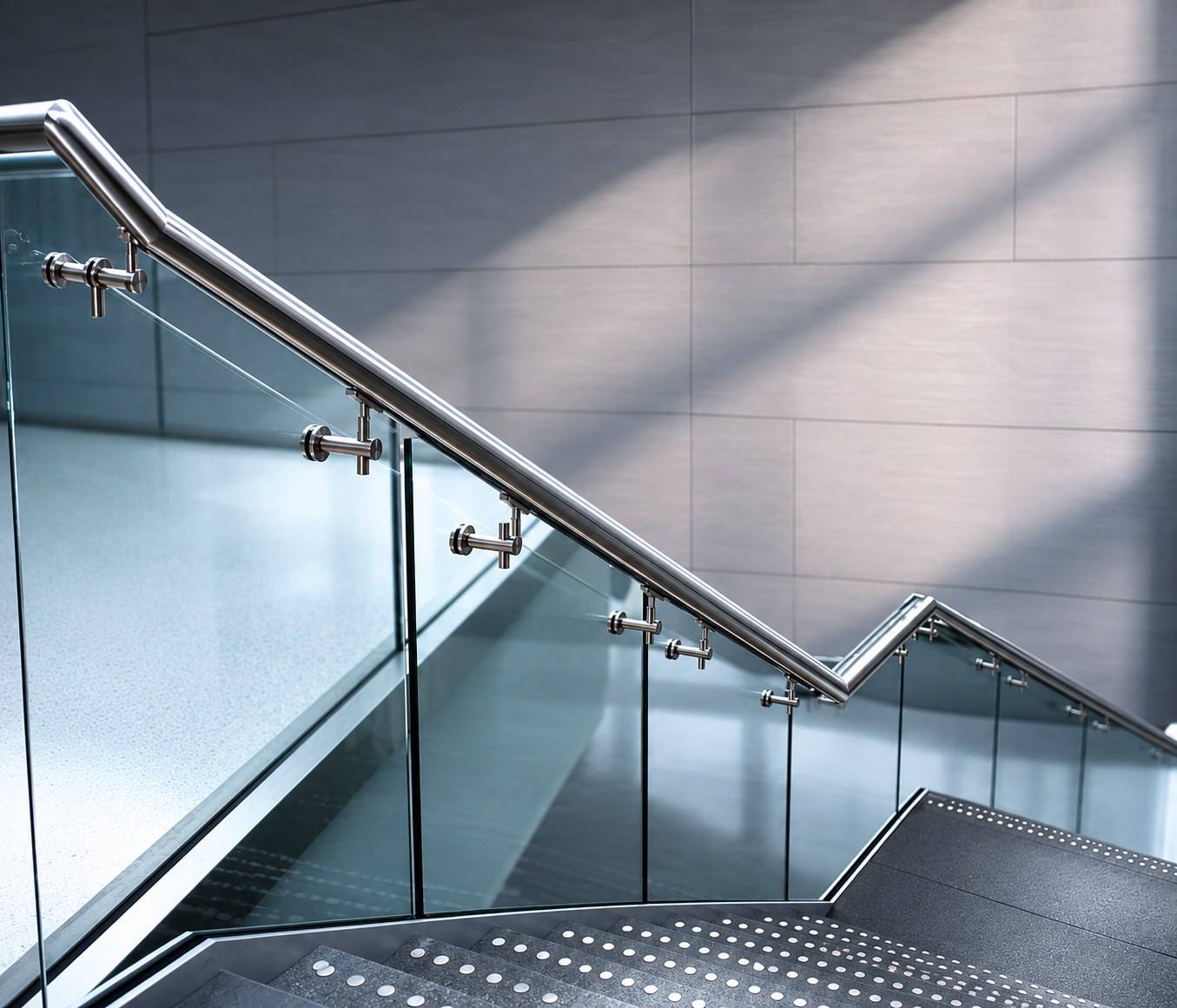
- Coastal air, swimming-pool atmospheres and chemical exposure each get their own specification.
- Material, finish and construction detail are chosen for the named product and the site.
- Share the conditions at enquiry and we build them into the specification.
Four Decisions, Made Together.
When you describe the environment, we review four things as one system instead of four separate specifications.
- Base material — brass or stainless steel, and which alloy or grade.
- Finish — a natural metal surface or a plated finish, and how it is prepared.
- Construction detail — where water can sit, how parts drain, and which metals and gaskets touch.
- Care — what cleaning the finish needs, and which products it must be kept away from.
Tested in Our Own Laboratory.
Hardware is tested in our own quality laboratory before it leaves the factory, including cycle testing of hinges.
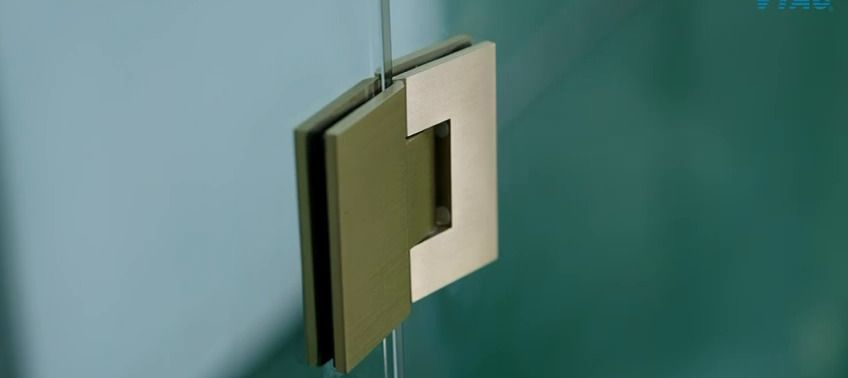
01 — Hinge under test 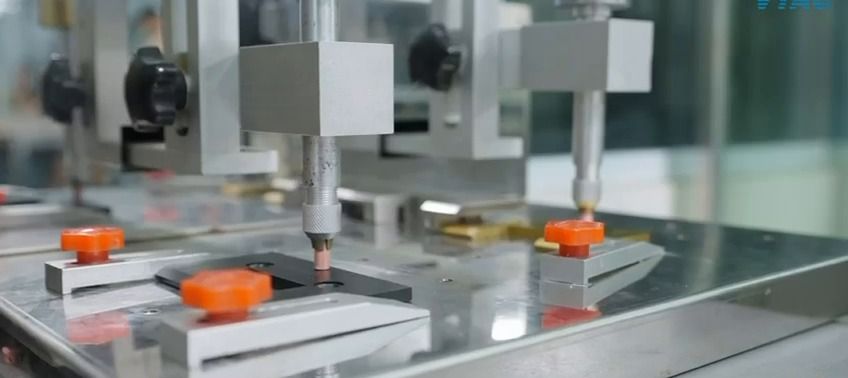
02 — Test fixture, quality laboratory 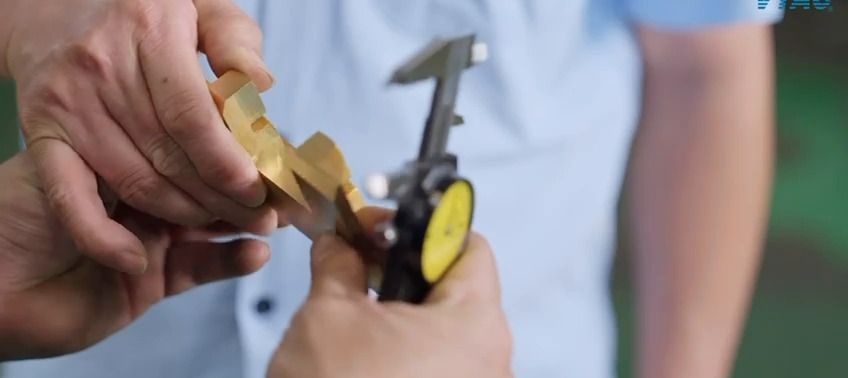
03 — Dimensional inspection
Stills from our 2026 factory film.
Technical notes
Technical Details.
- Test data
- Hinges are cycle-tested in our quality laboratory. Test reports are available on request.
- Demanding sites
- Coastal and marine locations, indoor and outdoor pools, and chemical or industrial atmospheres are specified in writing for the named product and finish.
- Maintenance
- Regular cleaning is part of durability. Deposits left on a surface are a common cause of staining, including on stainless steel outdoors. Use mild, non-abrasive cleaners and rinse with clean water.
- What to tell us
- Indoor, bathroom or outdoor; distance from the sea; pool or chemical exposure; cleaning regime; and the service life you are designing for.
Weather Is Part of the Design
Where Will the Product Live?
Describe the environment and we will specify the material-and-finish combination for it.